
- Sat Jul 30, 2011 11:33 pm
#21549
Wonderful thread - bops, special thanks for your pics and the info.
Thanks for all the explanations !bops wrote:Agreed... two very different rhythms, same name.Dugafola wrote:Bara is also a big Malian rhythm recorded by the likes of Soungalo, drissa kone etc...which is the same as the one you have in your list Michi...
the dunun rhythm, bada, is a whole other beast.
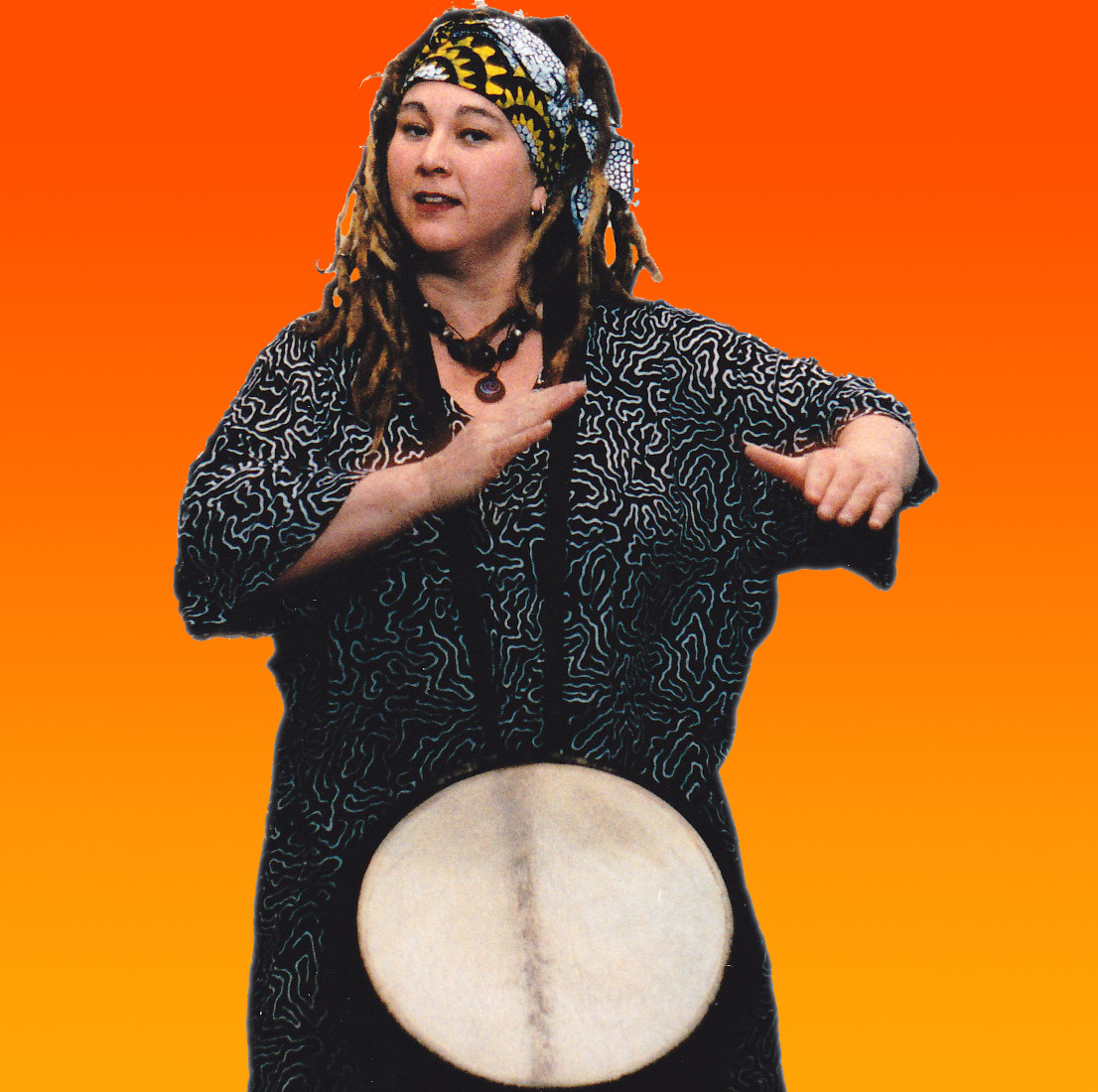
The Malian Bara rhythm is also known as Kote, which comes from Segou region. It's part of Koteba, like Tansole. It was originally played on Bonkolo and ... you guessed it, the Bara drum. That's why the rhythm is also called Bara. The Bara is a large kettle drum worn around the waist and played with the palms of the hands.
What gets confusing is the fact that there are many different meanings and applications of the term Bara. There is a calabash drum, played in Bobo and Senufo regions, which is also called bara. Like others have said, it can mean circle or dance space. If you put the emphasis on the first syllable, it means work. Don't forget the Bari, which is different but also from Segou.
Kote (Bara) can also be played on jembe and dunun.
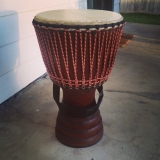
Here is a picture of a Bonkolo drum, played with a thin stick or reed in one hand:
(right-click and choose View Image...) And here's a Bara drum, played with two hands:
watch the video from min. 6:00 to 8:46 and you will hear the resemblance clearly. note that with the transfer to the melting pot Bamako and to the djembe and konkoni, the regional rhythms can change significantly.ChristianAMR wrote:Then , this video features 2 rhythms , which again are unlike any of the above-mentioned transcriptions . So it seems that even though the Malian Bara is an important rhythm , it is not too prominent in recordings and videos . And there seem to be different versions , which do not sound very similar .
Thanks for the clarification !djembefeeling wrote:watch the video from min. 6:00 to 8:46 and you will hear the resemblance clearly. note that with the transfer to the melting pot Bamako and to the djembe and konkoni, the regional rhythms can change significantly.ChristianAMR wrote:Then , this video features 2 rhythms , which again are unlike any of the above-mentioned transcriptions . So it seems that even though the Malian Bara is an important rhythm , it is not too prominent in recordings and videos . And there seem to be different versions , which do not sound very similar .
for Bamako, Rainer Polaks "Art of Djembe" books are the best reference out there. Stephan Rigerts book has it's merits, but with the transfer of konkoni bass patterns to a Guinean set of three dunduns (dundun, sangban, kensedeni) there is one more change in those rhythms caused by our demands to play Malian rhythms in a familiar context of workshop settings apart from Afrika.
For another recording see also Abdoulaye Diakite and Mamadou Sidibé: Jebe Bara.
exactly! Rainer Polak writes about this ambivalence of the two rhythms in his Jenbe Realbook 2. Neither way is wrong, there are good arguments for both points of view.ChristianAMR wrote:That´s somehow similar to what happens for Sandia/Lamba , where you can hear the "1" on 2 different points , shifted for 2 subpulses .
It´s comforting to know that Bara can also be heard both ways ... I wasn´t aware of that .djembefeeling wrote:exactly! Rainer Polak writes about this ambivalence of the two rhythms in his Jenbe Realbook 2. Neither way is wrong, there are good arguments for both points of view.ChristianAMR wrote:That´s somehow similar to what happens for Sandia/Lamba , where you can hear the "1" on 2 different points , shifted for 2 subpulses .
I see that you come from Vienna. Then you have an excellent resource on your hand.
that's exactly the article of the jenbe realbook 2. I wrote you a personal message that you might want to read. did you receive that?ChristianAMR wrote:http://www.bibiafrica-records.com/JenbeRealbook.html
Thanks for message , you are right .djembefeeling wrote:that's exactly the article of the jenbe realbook 2. I wrote you a personal message that you might want to read. did you receive that?ChristianAMR wrote:http://www.bibiafrica-records.com/JenbeRealbook.html
The jenbe players did cheat a little und modified the bara rhythm to create a piece (...) All (rhythms) have been changed in Modibos time (1960-1968).
there are regional differences in dialect and pronounciation, but the "dj.." and "y.." words in maninka should be pronounced the same.bubudi wrote:the 'd' and 'r' interchangeability between regions in maninka country (i.e (g)bada and bara) is merely accent. there are similar parallels in different pronunciation among regions in america, england and most other countries. another example in malinke is 'j' and 'y', e.g. (d)jabara or yabara.
just to add to bops' info on the malian rhythm bara, it's from the bamana people and is usually one of the first rhythms played during a bamanafoli.