
- Sun Jul 01, 2012 8:13 pm
#27466
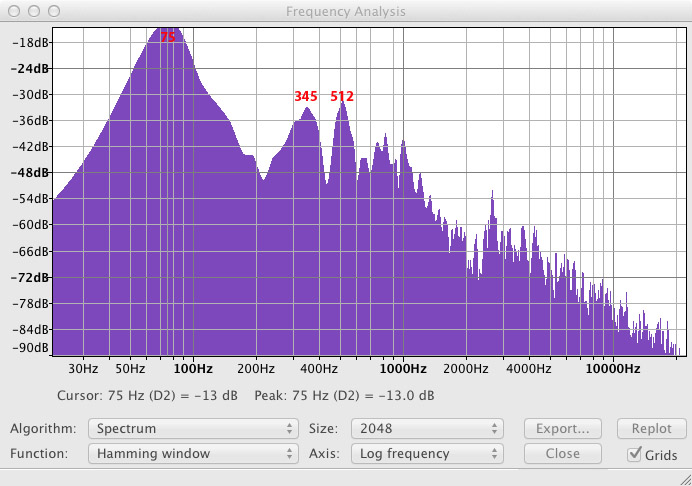
Now then, in all of the above slaps the fundamental and first partial (M2) have been successfully suppressed, while the next 3 partials (at around 700, 800 and 1000Hz) have been emphasised (well, I only really managed to emphasise the first of these effectively).
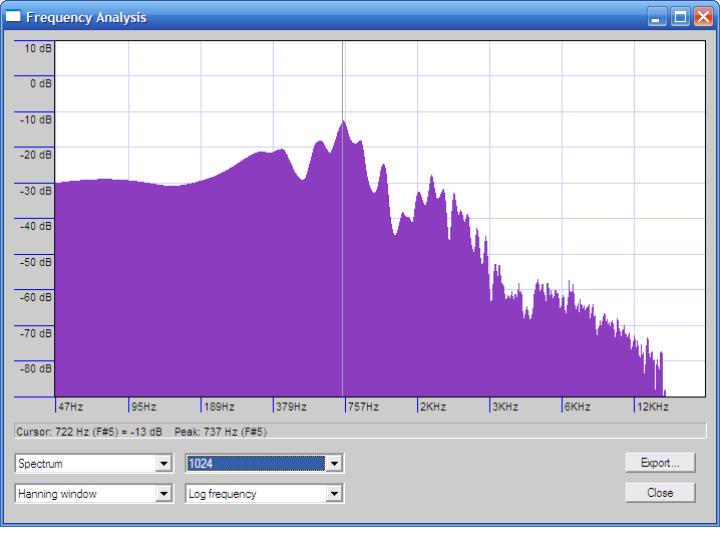
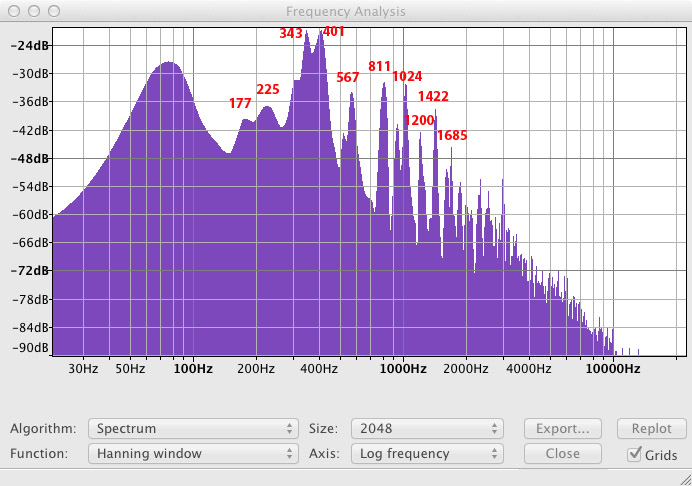
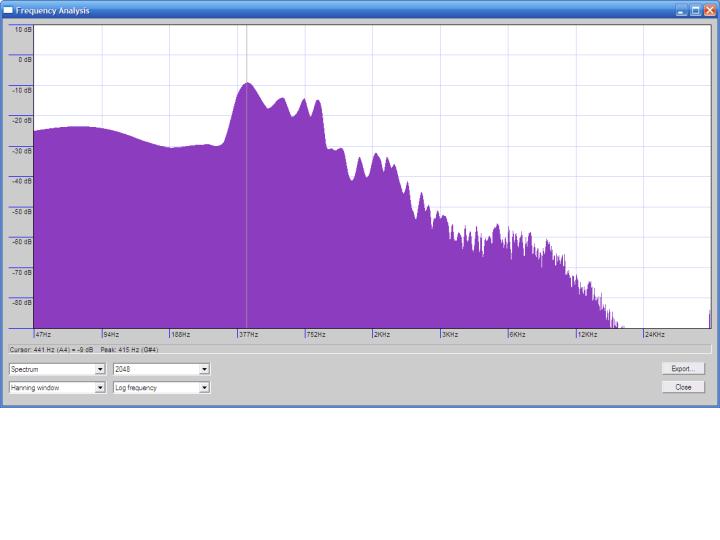
Here’s a graph of a fluffed left-hand slap (I don’t do this too often thankfully):
 Fluffed left hand slap high fundamental.jpg (26.14KiB)Viewed 4516 times
Oh dear – you can clearly see that the fundamental is the highest peak here. M2 (at around 550Hz for me) comes next at a lower intensity, with M3 and M4 at the same lower intensity. This was more tone than slap in many ways, but the higher partials are clearly audible, though M2 is way too high also. It’s one of those annoying in-between strokes that is a little bit of both tone and slap. Grrrrr.
Fluffed left hand slap high fundamental.jpg (26.14KiB)Viewed 4516 times
Oh dear – you can clearly see that the fundamental is the highest peak here. M2 (at around 550Hz for me) comes next at a lower intensity, with M3 and M4 at the same lower intensity. This was more tone than slap in many ways, but the higher partials are clearly audible, though M2 is way too high also. It’s one of those annoying in-between strokes that is a little bit of both tone and slap. Grrrrr.
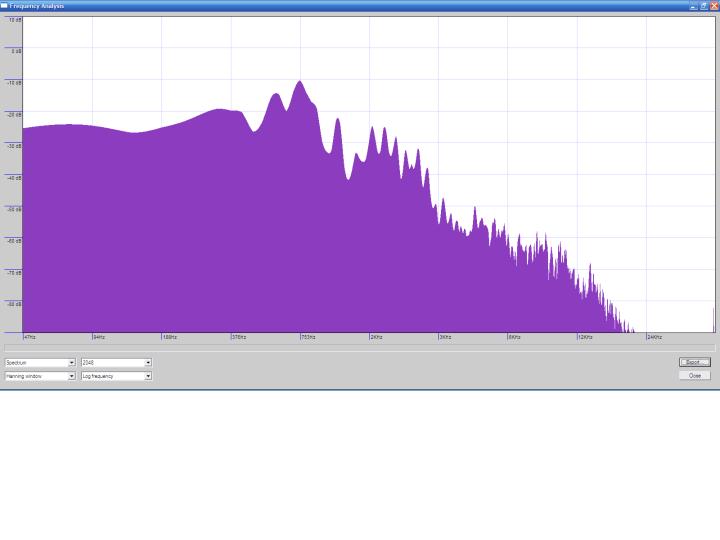
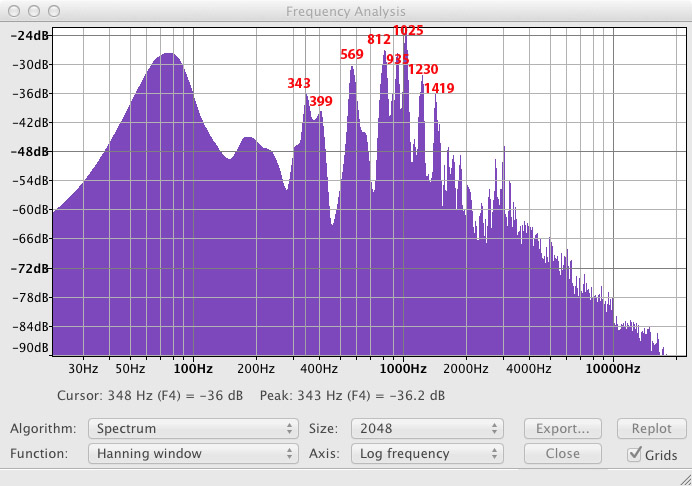
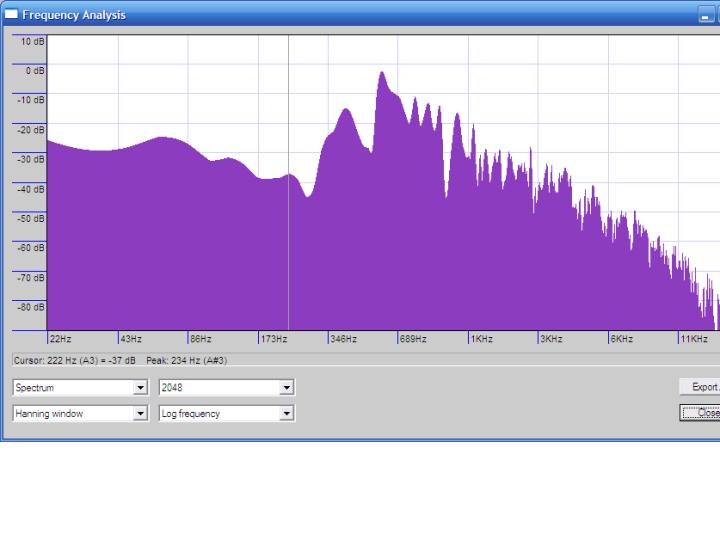
So are the masters always perfect……er….no. This is a Mamady slap that is far from perfect:
 Mamady ok slap.jpg (32.17KiB)Viewed 4516 times
Here the first biggish peak is the fundamental, a bit high maybe but so far so good. The next, and highest peak, is the M2 partial (500-600Hz or thereabouts) followed by 3 much lower peaks. This still has the classic Mamady triple-peak shape, but he has failed to suppress the M2 partial (I’m sure it’s not deliberate here because I took it from a signal)
Mamady ok slap.jpg (32.17KiB)Viewed 4516 times
Here the first biggish peak is the fundamental, a bit high maybe but so far so good. The next, and highest peak, is the M2 partial (500-600Hz or thereabouts) followed by 3 much lower peaks. This still has the classic Mamady triple-peak shape, but he has failed to suppress the M2 partial (I’m sure it’s not deliberate here because I took it from a signal)
Jurgen – do you remember I was talking about that first partial (that I was hearing as a sixth) creating an ok slap, but the octave being the one I really liked? You can clearly see that’s what’s going on in this slap. Too much M2 (an interval of around a fifth or a sixth) and not enough of the higher partials.
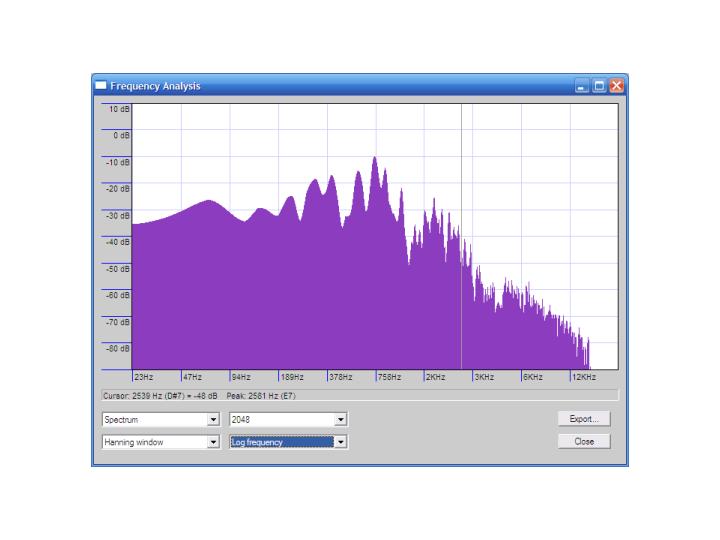
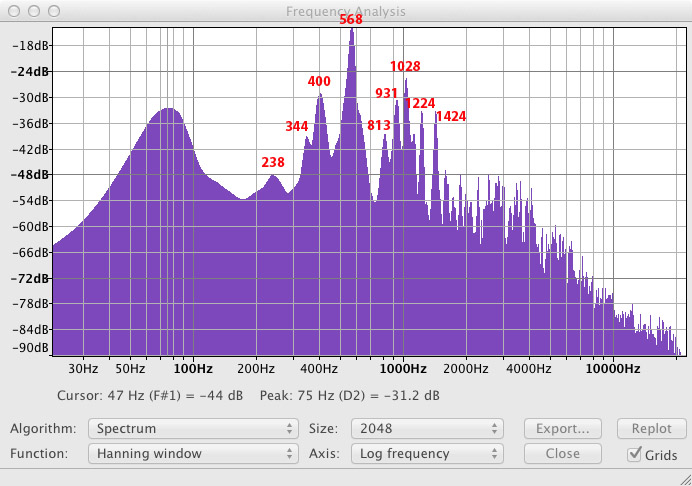
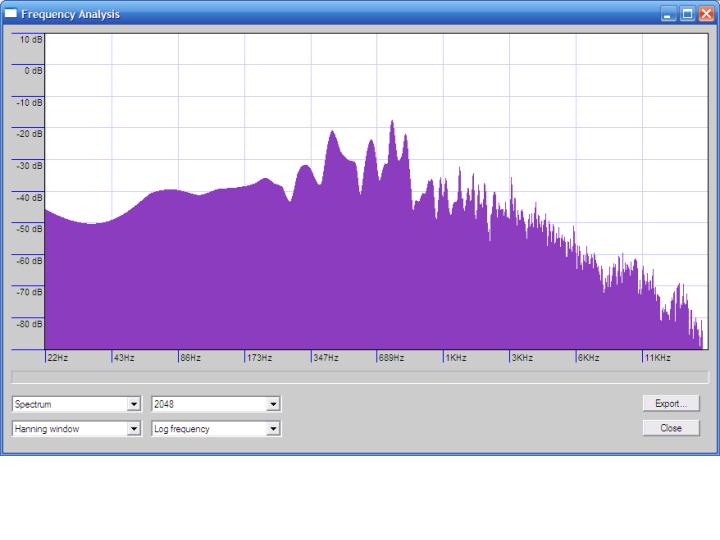
Again, for comparison, here’s a graph of a not-so-great slap from Iya Sako.
 Iya ok slap.jpg (31.94KiB)Viewed 4516 times
Again you can clearly see the M2 partial is really high (although M4 is slightly higher still).
Iya ok slap.jpg (31.94KiB)Viewed 4516 times
Again you can clearly see the M2 partial is really high (although M4 is slightly higher still).
Neither Mamady nor Iya’s slap is anywhere near as bad as the abortive effort from me: whereas I managed to accidentally emphasise the fundamental, both Mamady and Iya failed to successfully suppress the M2 partial.
That’s it for now. More on tones to come…
Here’s a graph of a fluffed left-hand slap (I don’t do this too often thankfully):
So are the masters always perfect……er….no. This is a Mamady slap that is far from perfect:
Jurgen – do you remember I was talking about that first partial (that I was hearing as a sixth) creating an ok slap, but the octave being the one I really liked? You can clearly see that’s what’s going on in this slap. Too much M2 (an interval of around a fifth or a sixth) and not enough of the higher partials.
Again, for comparison, here’s a graph of a not-so-great slap from Iya Sako.
Neither Mamady nor Iya’s slap is anywhere near as bad as the abortive effort from me: whereas I managed to accidentally emphasise the fundamental, both Mamady and Iya failed to successfully suppress the M2 partial.
That’s it for now. More on tones to come…