an interesting and difficult topic, I guess, especially if we don't speak maninka.
daniel is in Upper Guinea for a couple of weeks, I think, so he cannot chime in. he said something about the meaning of the dununs in Denmusonikelen:
the dundun melody "says" something like (better: the most current interpretation of the dundun melody means) "a young girl's sex". We all leave this out while talking about the rhythm and by using this "name" for it: denmusoni kelen just means "a young girl". Africans sometimes use "denmusoni sen kelen" - "a young girl's leg", which could fit to the melody as well. The whole thing is even "worse", if we consider the first dundunba stroke of the melody a part of the semantic unity, too: it can only be understodd as "i" - so: "you". The whole thing then becomes something like "you little girl's (...)", and that's why it's not often spelled completely.
The interpretations can change, though: In Sangbarala they "invented" the meaning of "yen yenna dyede bara" some years ago and the Sangban blocage was "nfa Musa di tama" (father Moussa is walking a lot, where - in the meaning of "behind which girl" - have you seen him today").
And some people just call the rhythm "Hamana dundun".
I read a german masters thesis by Ulrike Steer, who -- with her husband -- used to organize trips to Mansa in Baro. The title translates into something like:
drumming rhythms of the Malinke in Baro and their social context. In chapter 8 she provides some examples of djembe patterns and speech. She cites Mansa for "
Bring me 10 plates of rice and 9 chicken, put them there no matter if we are already there or not." She does not provide the Maninka nor the pattern, though. She claims a lot of these patterns circle around food and then gives the example:
1...2...
sttstts.
she claims it says
la-kudu la-kudu ba, meaning
fishballs, big fishballs.
Another example she gives is for
Soro during the work on the field:
1...2...
tt.s.s.s
bidi na na na =
you, come closer, but only bent over
I don't know if she got it right and if this is a variation to what Mansa shows in the
foli video at 5:28 or if this actually was supposed to be this more common pattern:
1...2...
tt.s..s.
[video]
http://www.youtube.com/watch?v=lVPLIuBy9CY[/video]
her last example is particularly funny and interesting at the same time. this pattern has different meanings in different contexts, she claims:
1...2...
ssttss..
it can say
kaya kili basa (you dick-balls-lizard) or
kana kudu bana (the sorrows are gone). she cites Mansa for it:
"
when the barati work and I play this pattern in that situation, they know I insult them and thus incite them to take their work more seriously. But when the hardship of work is over I use this pattern for the dance right after the work and they understand, the trouble is gone. And then, when they dance without having done any work before, its an insult again in order to incite them to dance well. its the situation that changes this pattern." (i.e. the meaning of it)
Then I have some footage of Mansa teaching some french students on video. he teaches the solo accompaniment for
Soli:
1..2..3..4..
tts.bs.bs.bs
he says its meaning is
dulumba, timba, timba, timba (the elephant has big ears).
I told some people knowing more about the language and culture than I do about all those examples and they were very sceptic. Mansa is not interested in the "scientific" approach. he tells different stories depending on who asks on what occasion. I cannot say how reliable his words on this are. There is also this funny story of a friend of mine who tried to decipher the meaning of the passpart accomp on 12/8:
1..2..3..4..
s.ts..s.ts..
he said he asked many drummers about it and every single one came up with a different answer, one guy had even two meanings for it! He never tried to decipher the meaning of patterns again...
so I am also sceptical about the exact meaning of certain patterns in Maninka drumming. this is not to say there are none, but they seem to vary with time, place, person, and context.
In Kouroussa, Namoury Keita, the assistant of Mamady Traoré, did show me this pattern:
1...2...3...4...
s.tts.b.s.b.....
ko berika be-ri-ka (thank you very much) which doesn't seem to make sense seeing the repetition in words doesn't reflect in the pattern. they showed this to me after they had much fun drumming insulting patterns after some dudes from the village were passing by. those dudes didn't seem to care, so I don't know if they even understood the meaning of the patterns.
that is all I can contribute to this topic so far...
best, jürgen
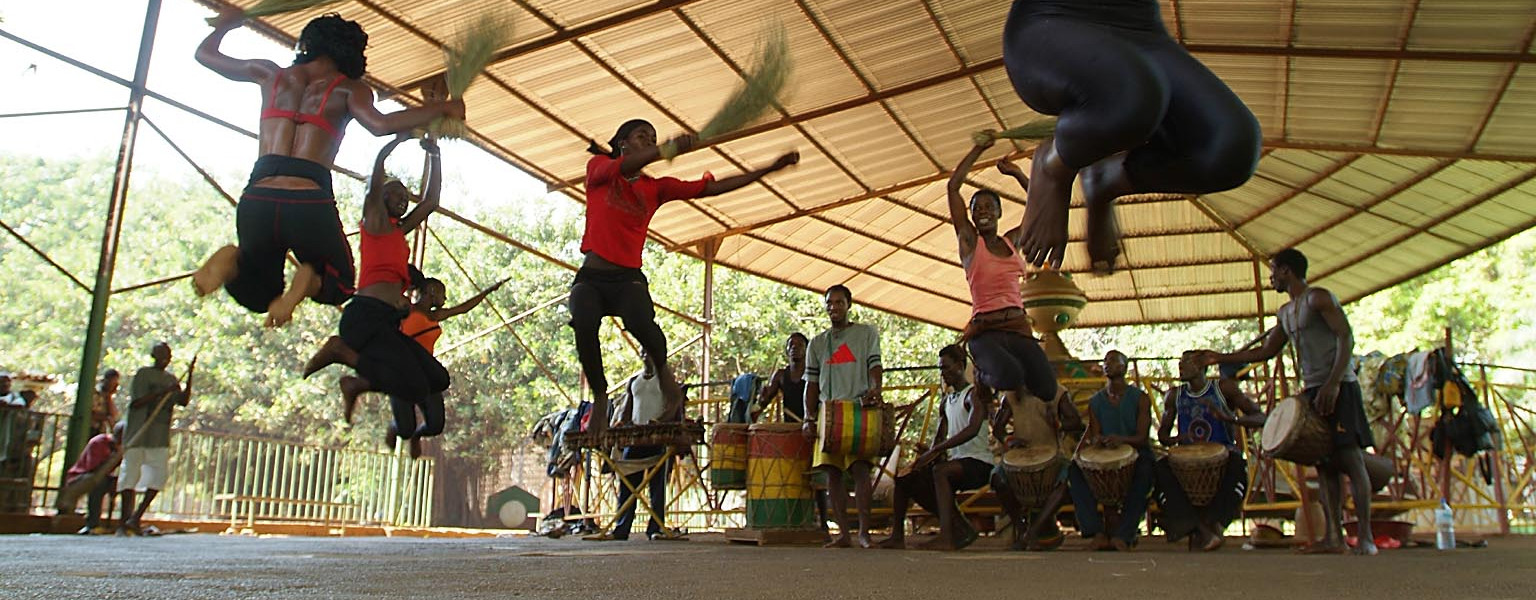

 Coltrane was playing phrases out of the bible.... I hear the words Koredjuga in Koredjuga... Abdouly told me the other words... but I forgott... I think it was Fore' tenah... Abdouly loved to dance Koredjuga... He'd show the step and then run back to the djembe and solo... great drummers are great dancers!